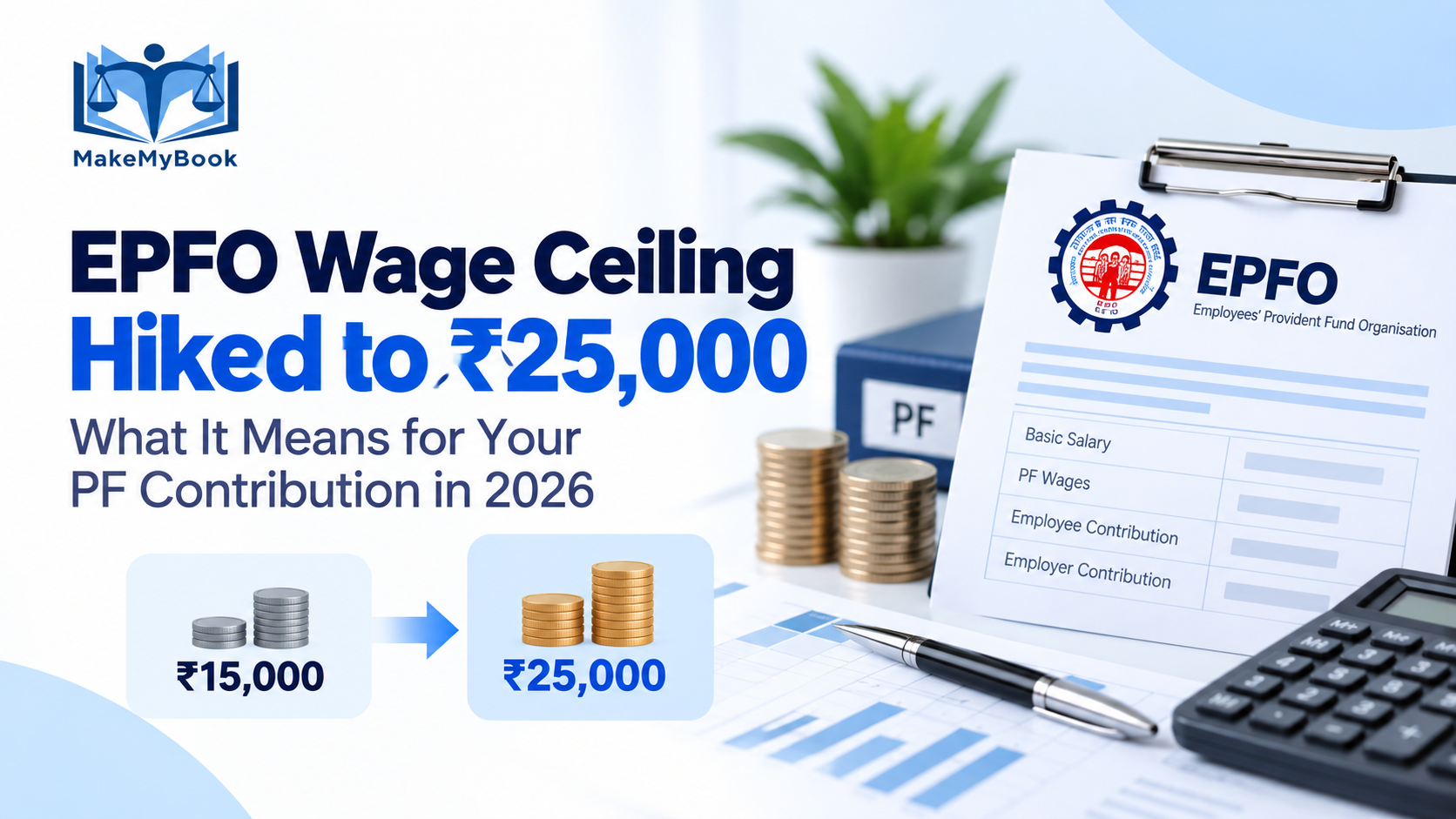
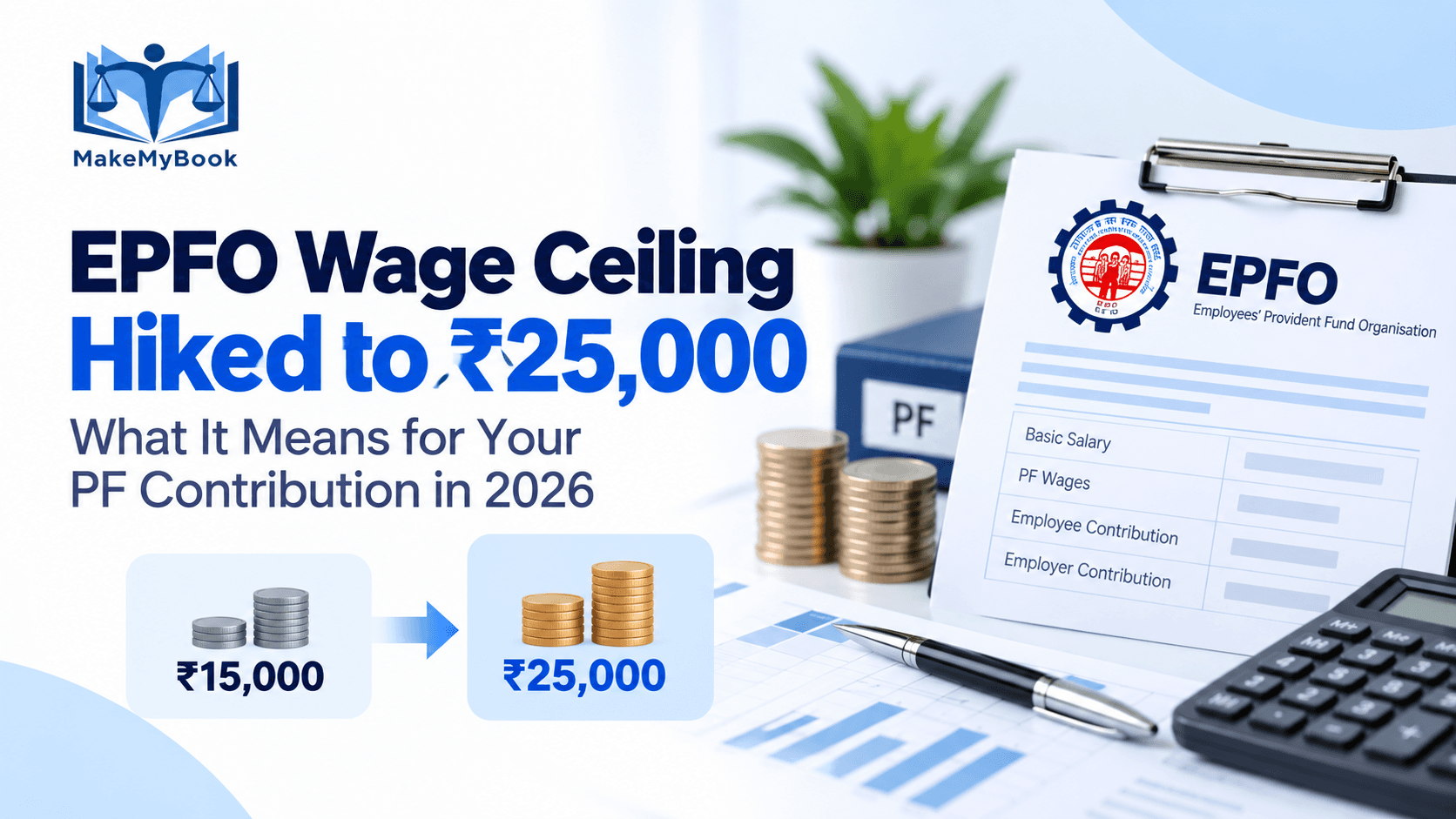
The EPFO wage ceiling 2026 update is official — the Government has raised the PF wage ceiling from ₹15,000 to ₹25,000 per month, effective 17 September 2026. This is the first revision in over a decade, and it directly affects how EPF, EPS and EDLI coverage applies to employees across India.
According to the Government, the revised ceiling is expected to bring over 51 lakh additional employees under mandatory EPFO coverage.
EPFO Wage Ceiling 2026 — What Changed
| Particular | Earlier | New |
|---|---|---|
| EPFO wage ceiling | ₹15,000/month | ₹25,000/month |
| Effective date | — | 17 September 2026 |
| Additional employees covered | — | 51 lakh+ |
| Employee PF contribution at ceiling | — | Up to ₹3,000/month (12%) |
Who Does EPFO Wage Ceiling 2026 Affect?
The change is most relevant for employees whose PF wages fall between ₹15,001 and ₹25,000 per month. Previously, this group could fall outside mandatory EPFO coverage. With the revised ceiling, eligible employees in this bracket now come under mandatory PF, subject to applicable EPF Scheme provisions.
How PF Contribution Is Calculated Now
Employee EPF contribution is calculated at 12% of applicable PF wages. For example, if applicable PF wage is ₹25,000:
₹25,000 × 12% = ₹3,000/month
Over a year, that’s ₹36,000 going into the employee’s PF account — up from a lower base under the old ₹15,000 ceiling. Note: this is illustrative — actual deduction depends on individual salary structure and applicable PF wages.
Will Take-Home Salary Be Affected?
Possibly, yes. If PF contribution increases because the applicable wage base is now higher, the amount deducted monthly may also rise — meaning a marginally lower take-home salary, but higher long-term retirement savings through EPF/EPS.
What EPS and EDLI Cover
Beyond basic PF savings, eligible employees also get:
- EPS (Employees’ Pension Scheme) — pension-related benefits
- EDLI (Employees’ Deposit Linked Insurance) — insurance-linked protection
The wage ceiling hike extends these benefits to a larger pool of employees.
What Employers Need to Do
Employers should review payroll and PF-compliance processes in light of the revised ceiling — update payroll systems, recheck employee eligibility, and ensure PF wage configurations reflect ₹25,000 from 17 September 2026 onward. This is exactly the kind of mid-cycle compliance change that catches businesses off guard if payroll isn’t actively managed.
If you’re unsure whether your payroll setup already reflects this change, our payroll management and PF/ESI compliance service handles exactly this kind of update — so you’re not manually tracking every EPFO notification yourself.
What Employees Should Check
- PF wages on your latest salary slip
- Employee and employer PF contribution amounts
- UAN details and EPF passbook entries
Payroll compliance changes like this happen more often than most businesses track. If you’d rather have your PF, ESI and payroll compliance monitored for you, talk to our team — we’ll make sure your payroll reflects every regulatory update, including this one. The EPFO wage ceiling 2026 update is one of the most significant payroll compliance changes in over a decade